

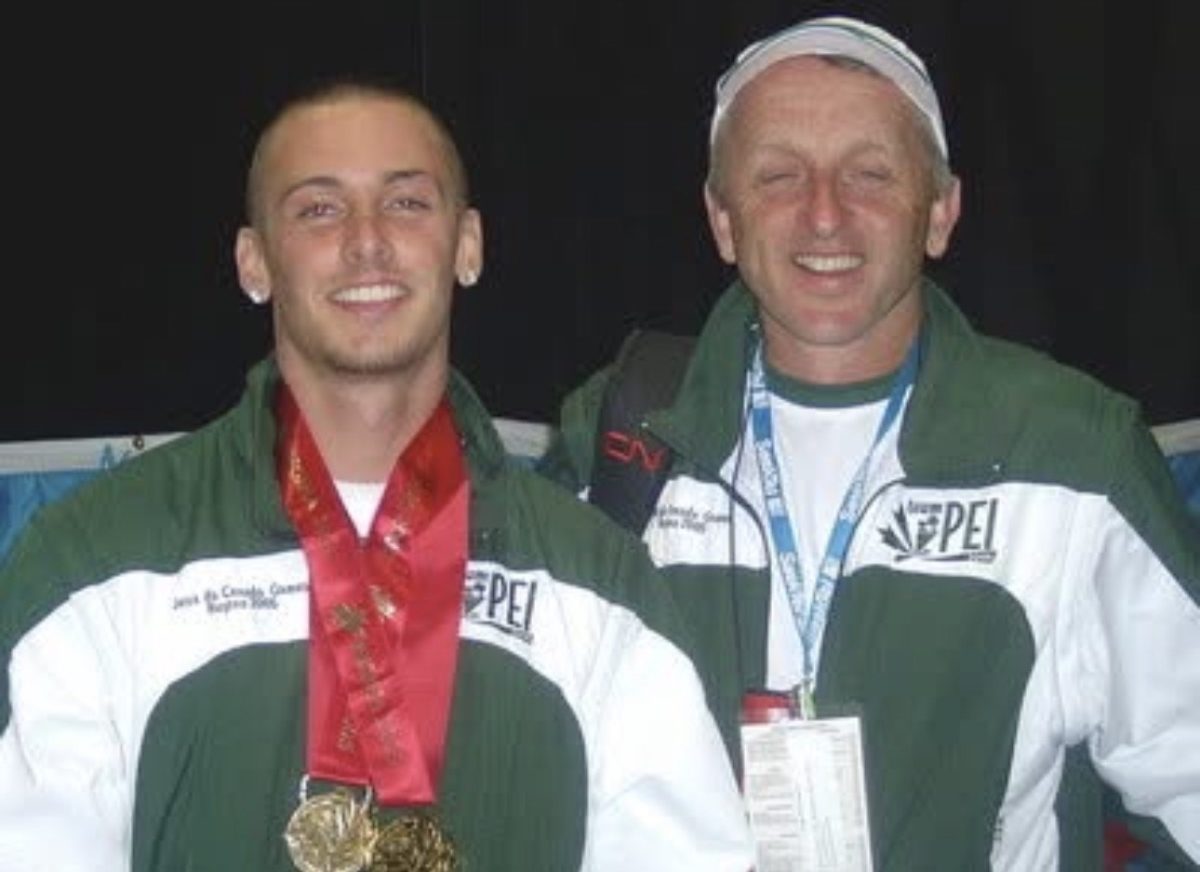
Jared Connaughton shared his journey in track and field, beginning with a local meet in fifth grade to winning the 100m in the Canadian Championships in 2002. He distinguished humility as the primary attribute that helped him accomplish such amazing feats, such as competing in the Olympics twice. He was born with this insatiable desire to win and compete and hopes to instill in his athletes the same hunger, while prioritizing patience and commitment to their growing potential.
The advent of such an outstanding career, funnily enough, began on a cold and dismal day. Connaughton’s attitude also seemed to be reflecting the weather; he was terrified. As a fifth grader, this was an entirely new experience for the now-Olympic athlete.
Only a year later, Connaughton’s PE coach, who was instrumental in lighting his passion for track and field, suggested that he take up running more seriously. Mr. Frizzle also gave Connaughton his first pair of spikes, as an implicit incentive for him to start the sport.
In sixth grade, Connaughton began participating in regional meets. He not only competed, but performed remarkably well. In just a short period of time, by age 14, he went to the national championships for track and field. He likened the experience to the AAU nationals. He spoke of how out of his depth he felt when competing against such a talented pool of athletes. Yet, once again, he excelled in this competitive environment and was a finalist in both the 100m and 200m.
Despite his success, he still wasn’t satisfied. The following year, after much diligence and perseverance in training, he won the silver in both events.
In 2001, Connaughton was now competing in the U17 division. He placed fourth in both of the sprints and came home a bit frustrated.
“It was disappointing, because, you know, I naturally want to be on the podium,” Connaughton said.
His goal for the end of his season was to run under 11 seconds, and he hit exactly 11 flat.
Two weeks later, he ran in the Canadian National Championships, and here there were no age divisions; it was the best against the best. This competition was very eye-opening to Connaughton—he was competing against some of the most talented athletes he’d ever lined up against. These national championships taught Connaughton to push himself athletically and mentally in numerous new ways in the upcoming season.
Connaughton returned to his hometown of Charlottetown and was met with an incredible opportunity. A past Olympic bobsled athlete for team Canada, Dave MacEachern had recently opened a training facility for elite athletes in the area. Considering his growing success in track and field, Connaughton was offered a grant from the government to train under the tutelage of such an accomplished athlete. The one caveat, however, was he couldn’t play in any other sports. So he gave up both soccer and hockey in order to specifically focus on track.
Training officially began in the fall and continued until the summer. Connaughton’s toil eventually paid off as he returned to the same meet he placed fourth in the year before and won all events he entered in.
“So that was it for me. I was like, ‘Okay, what’s next?’” Connaughton said.
His success only fueled his fire for even greater achievements.
During his transition from his collegiate to professional career, Connaughton learned some of the most valuable lessons from not only his coaches but his teammates. He spoke of the difficulty in attaining a cutthroat mentality when it came to competing.
“It’s one thing to imagine yourself as an Olympic-caliber athlete that has all the intangibles, like the work ethic, the talent, the training, and the skill. The men and women I trained with were really the catalysts to me attaining those assets,” Connaughton said.
He was now running with a group of local DFW Olympians, and he spoke of the difficulty he endured at first, training with such talented athletes.
Connaughton said, “I was getting my butt kicked nearly every day I practiced,” yet through this he grew to understand his teammates’s mindsets. “Their mentality was, really hyper-focused and super, super, confident, but they were also willing to listen to their coach and body, and be humble in that experience.”
After some time, he began adopting such habits into his own psyche and noticed a considerable difference in his own performance on the track and how he carried himself off of it.
“[Confidence is] knowing what your potential is, but also knowing that the humility to get there is just as important as the bravado that you express to everyone else,” Connaughton said.
As a coach, Connaughton emphasizes the importance of a good warm up. Regardless of what other coaches may say, he believes the duration of time to get actually physically warm is different for every athlete. It’s not only for physical preparation but also a time to mentally prepare yourself.
“It’s the time that you spend in your warm-up that allows you to evaluate, to almost run the race before it happens,” Connaughton said.
Many athletes who haven’t done their pre-race “ritual” often feel the effects of being ill-prepared, either in their race or behind their blocks.
Due to his zeal for a good warm up, Connaughton is usually found helping his athletes prepare rather than actually watching their races.
“Our warmups have a sense of purpose and volition, so that when our athletes enter the call room or reach the start line they feel as though they have checked every box and are ready to perform,” Connaughton said.
To Connaughton, progress isn’t linear. His way of training consists of what he calls a “macro cycle.” This series of practices is spread out over a 12-month period, and each month has a specific place in an athlete’s progression. For track athletes at FWCD, this cycle is meant to peak at the time of the SPC championships.
Mistakes both in practice and competition are accepted and understood. They provide Connaughton and the athlete a frame of reference as what to work and focus on, so that the meets leading up to SPC are just smaller parts to puzzle, helping develop the athlete rather than pushing them to constantly excel.
For many athletes, track is a lonely and daunting sport. Yet, Connaughton hopes to instill in everyone he coaches that he has faith in their capabilities.
“Knowing that your coach believes in you and trusts you can give you the bravery to go out there and really express your potential,” Connaughton said.
He also expressed his appreciation for having some of the most qualified and helpful coaches during his developmental years that have really influenced his own coaching philosophy. Despite having what he deemed as a “carousel” of coaches in college, he felt supported by all of them. His professional coach, Monte Stratton, developed a unique training style for his athletes. Connaughton depicted his sessions to be laid back and the emphasis on quality over quantity.
As an up and coming sprinter, he often felt the stress and expectation of needing to constantly perform at his best.
“I was super intense, but that intensity can be fragile. So having these calming presences as coaches leveled me and kept me humble,” Connaughton said.
The road to becoming an Olympian is a strenuous one, but Connaughton said the dream must be forged now for young aspiring athletes. He believes athletes should always set the bar high but also have a comprehensive plan to achieve such a goal, because hundreds of other athletes have the same ambitions.
“You can’t achieve it on your own. So getting a good network of people and not relenting from that really audacious aspiration is the best advice I can give to someone who wants to achieve that goal,” Connaughton said.
His career as an athlete has been instrumental in his success as a coach. He learned equally from the people he met on the path to becoming an Olympian, and from the mistakes and heartbreak he encountered. Connaughton hopes for one of his athletes with a similar drive as he, to achieve whatever they’re capable of, either at the next level collegiately or professionally. No matter what event an athlete here at Country Day competes in, they’re a part of this family Connaughton has strived to create on the track.