

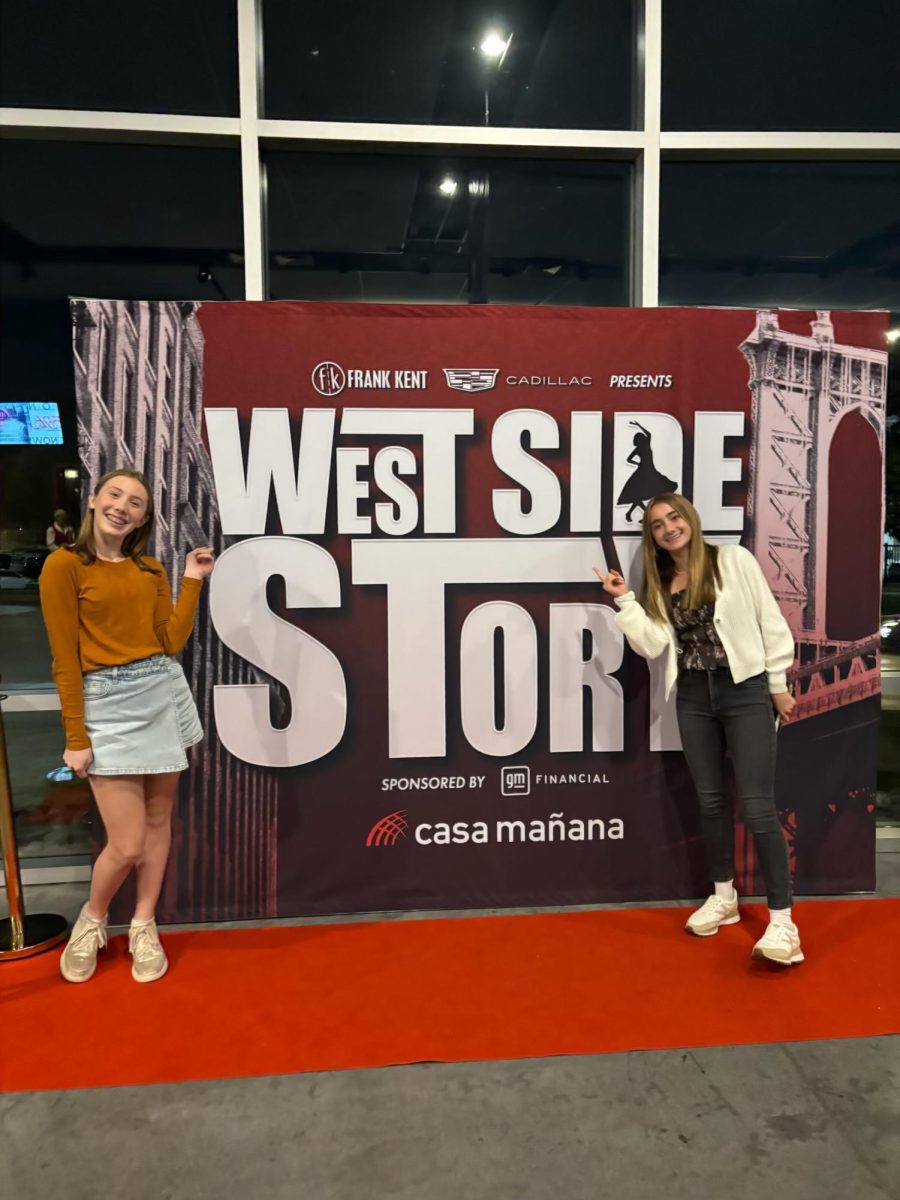
Casa Mañana is a local theater in Fort Worth, where I recently attended a production of “West Side Story.” An allusion to Shakespeare’s “Romeo and Juliet,” “West Side Story” delves into the timeless tale of young love resulting in tragedy, and I was riveted by the parallels between the two renowned performances. Despite the opposing levels of wealth and prominence within the two story lines, the inevitable conflict between families still exists.
Based in 1950’s New York, “West Side Story” depicts the contrast between the oppressive and often savage lives of those within the gang community while also exposing their humanity and passion. Tony, played by Alex Benoit, and Maria, played by Addie Morales, the protagonists, are both voluntarily and involuntarily affected by the violence that surrounds them. A part of separate gangs, the two fall deeply in love, despite the walls that divide them.
Tony, a past member of the “Jets” gang, and Maria, the sister of the “Sharks” gang leader Bernardo, become entranced by one another. Their love is a symbol of defiance to the inveterate hatred between the two groups.
The plot explores themes of prejudice, social hierarchy, and the constant drive for power within the San Juan Hill Neighborhood of the Upper West Side. This community has historically been recognized for its crime, poverty and violence. Yet a growing immigrant society flourishes with vibrant culture in its streets, which sets a beautiful and convoluted stage for the characters within “West Side Story.”
Shakespeare’s infamous play “Romeo and Juliet,” and its character themes are pervasive throughout the set of urban decay. The Sharks pose as modern-day Capulets, and the Jets are the Montagues. Anita, Bernardo’s love interest, represents the Nurse serving as Maria’s close companion.
Casa Mañana’s performance began with an explosion of color and culture in the Upper West Side of New York. Immediately, a clash between the two rival gangs occurs. The male performers such as Yurel Echezarreta and RJ Higton, who play the opposing gang leaders, display their strength and dominance through captivating movements. Their synchronized gestures and dances illustrate the ongoing conflict.
As lights feverishly danced across the stage, and the music intensified, I could not help but feel the strong emotions of those on stage. These facets of the play foreshadow the inevitable struggle and confrontation that begins to mount as the climax of the play.
Costumes also played a large role in defining the characters as much as their cultural backgrounds. Anita and Maria’s dresses perpetually are in movement, displaying the whirlwind of excitement and emotion that are threaded throughout the production.
I found the balcony scene amid the concrete jungle of New York in West Side Story to be a compelling representation of the most pivotal moment in Shakespeare’s “Romeo and Juliet,” played out centuries before in the cobblestone streets of Verona. The thematic details, from forbidden love to passionate youth, carry an undeniable irony with regard to how although times may change, the human experience remains deeply rooted in the unrequited desire, which we cannot have, but fervently pursue.