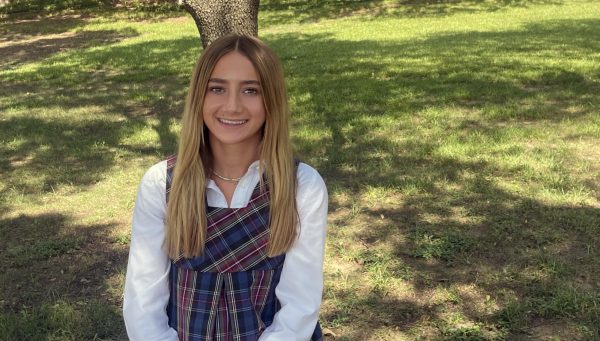

Head volleyball coach Tatiana Booth defined her journey as an athlete and a coach through the people she met, the injuries she endured, and the chances she took.
Booth began playing volleyball in middle school. At first, the sport was a way to connect with friends outside of the classroom. Yet, as her passion grew for the sport, so did her talent.
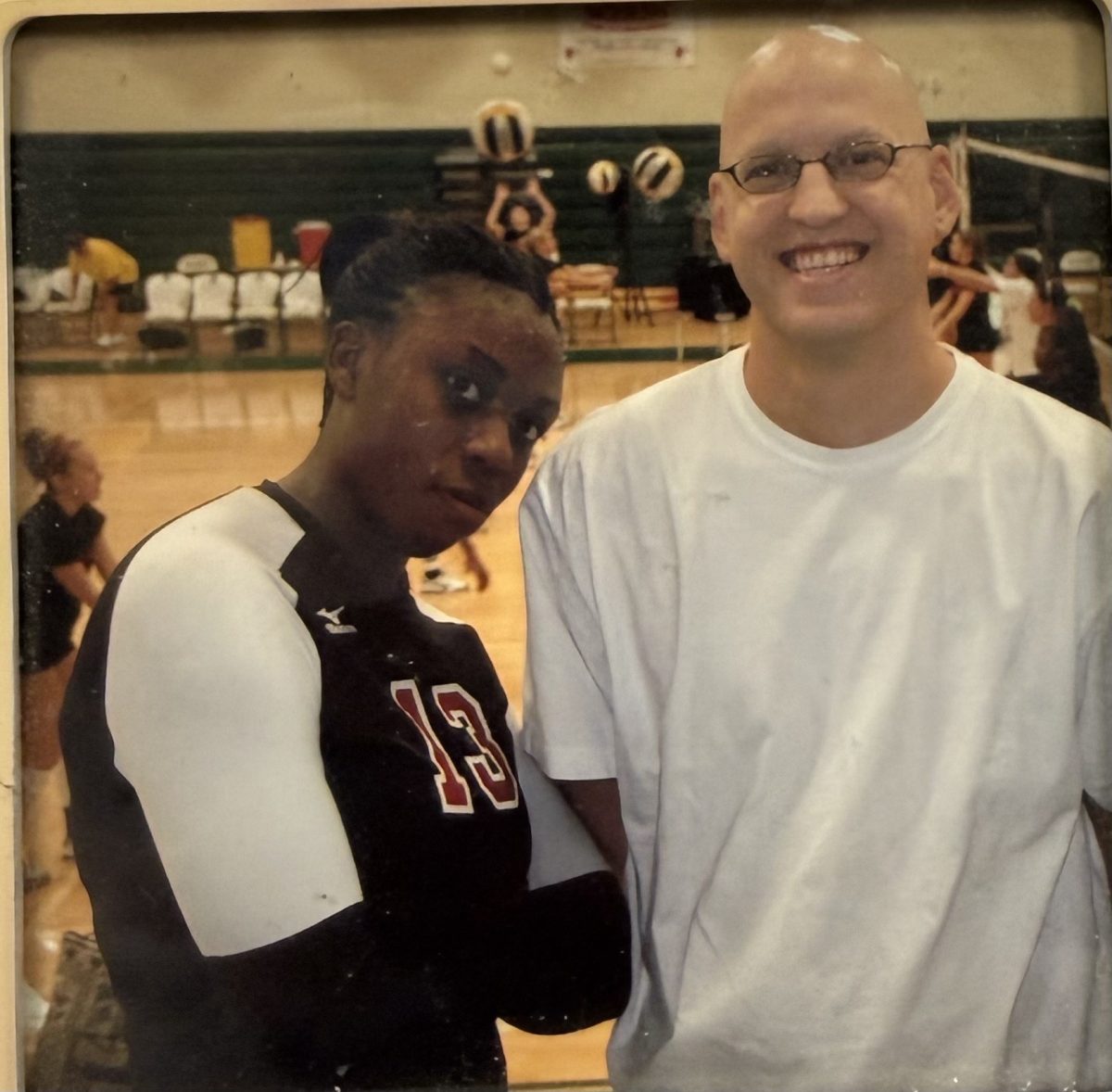
During her high school volleyball career, she played under three different coaches. Her third and final coach was a man named Coach Hall. Booth described her first impression of him as a bit rough. Initially, Booth was an outside hitter and had grown accustomed to that position. Coach Hall, however, thought she would succeed as a middle hitter. Although not originally welcoming to the idea, Booth later learned that it was the perfect position for her playing style.
After some time, Booth and her relationship with Coach Hall grew.
“I looked forward to being in the gym with him; I looked forward to being coached by him,” Booth said.
She described Coach Hall as someone that was genuinely interested in his players’ lives and well-being.
During her sophomore year of college, Coach Hall was diagnosed with stage four cancer. He passed away before Booth’s junior season. Whenever back in her hometown, Booth still takes the time to visit his grave.
Booth’s goal as a coach is to truly embody the lessons she learned from Hall. The relationships he grew and connectivity he brought to her high school team, she said, were immensely impactful to her current coaching style.
Coach Booth described her recruiting process as being very “lucky.” She played club volleyball for a year and realized that she didn’t enjoy it. Once she stopped following the club volleyball route, she began traveling and competing at numerous college tryouts.
Originally, Booth was verbally committed to play in her hometown at A&M Commerce, but things quickly changed when her close friend invited Booth to join her at a tryout. Booth tagged along, thinking this would just be for fun. Yet, she immediately fell in love with the school, and the coaches reciprocated the same feelings for Booth. After a spontaneous tryout, she now had the opportunity to play in college with her best friend for the next four years as well as receiving a scholarship to Hill College.
“Definitely the biggest thing I learned from college sports and athletics was time management,” Booth said. “College volleyball taught me that you can’t just wing it.”
Booth spoke of all of the valuable tools she gained from competing at the higher level, such as becoming a very detail-oriented person and maybe a slight over-communicator.
Coaching never really seemed to be Booth’s future when she was in college. A devastating knee injury, though, opened her eyes to the possibility. For nine months she was forced to sit on the sideline. At first, the injury took a toll on Booth’s behavior as a teammate.
“I was upset. I wasn’t very helpful, I wasn’t a good teammate. I wasn’t a good person because of that injury,” Booth said.
In time, Booth did begin accepting her role for what it was. Even though she couldn’t physically contribute to the team, she found other ways she could contribute to her team’s success. She began watching film habitually with her coaches and teammates, and discovered that she really enjoyed it.
Booth’s coaching career came out of a dark place for her. Yet, she found purpose within it.
“If people are going through darkness or having struggles, it may not feel like anything is going well, but there’s always something on the other side,” Booth said.
As a volleyball coach of 15 years, Booth has now taught the game at all levels. Before coming to FWCD, she coached at Tarleton State, and before that at Tennessee State, which is a D1 program.
Transitioning from player to coach had its ups and downs, but patience and understanding were the primary reasons she now thrives on the court. One thing that has definitely carried on from Booth’s athletic career into her coaching career was her enthusiasm. As a leader on the court, Booth has never found a problem motivating her teammates or players.
Booth defined volleyball as a game of errors, and it’s inevitable that an athlete will make a mistake. Rather than dwelling on the mistake in the moment, Booth encourages her players to respond to the difficulties in a positive way.
“Errors are going to happen, but it’s more about our response. I always want them to respond to pressure and adversity in a positive way,” Booth said.
She has created a community of comfort and connection through always being there for her players both on the court and off.
“I tell the girls all the time, I’m going to be your biggest cheerleader, but I’m also always going to hold you accountable,” Booth said.
Booth often receives invites to baby showers and weddings from her past players and teammates. Some of her players also are following the path of coaching. She says moments like those mean much more to her than winning a game; the meaningful relationships she’s built shows how she’s won as a coach.