

For weeks leading up to the Winter Olympics, the figure-skating world watched an American prodigy redefine what was possible on the ice. Ilia Malinin, widely known as the “Quad God” for landing the most difficult jumps the sport has ever seen, arrived at the Olympic Games as the overwhelming favorite. His two-year undefeated run across international competitions made gold seem almost inevitable. What unfolded in the Olympic free skate, however, exposed the thin line between technical superiority and human vulnerability when performing under pressure. Dominance was routine … until it wasn’t.
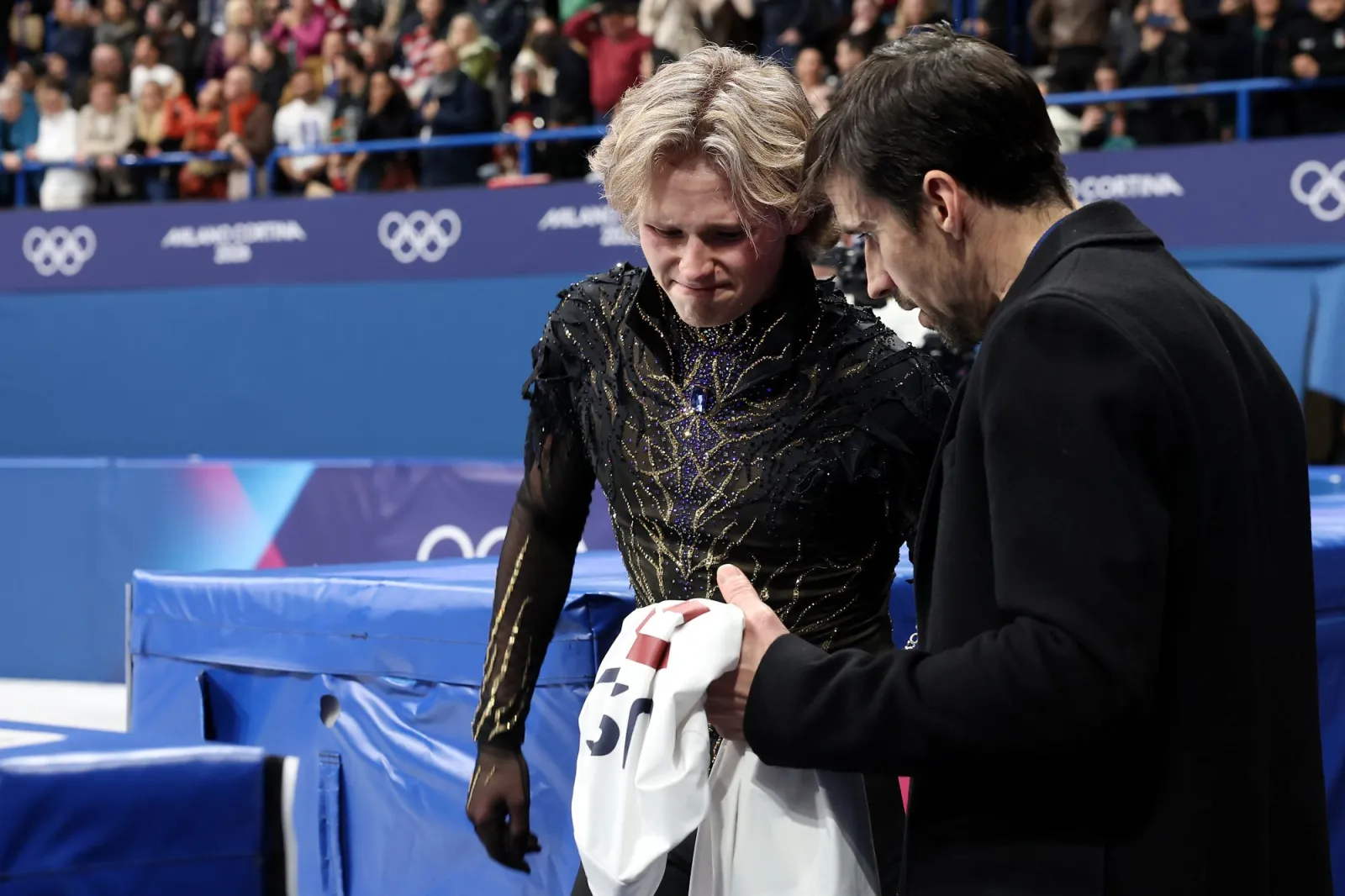
I was, like many, captivated by the way Ilia changed, even lifted, the sport. He led after the short program and went into the free skate with history on his side. Indeed, the leader after the short program carries a substantial advantage into the final round. But on the biggest stage, his run of near perfection cracked like concrete under pressure. Twice in the free skate he fell, struggled to regain his rhythm, and failed to land his signature quadruple axel. It showed on his face, and the result was stunning: a final score of 156.33 and an eighth-place finish; well below the marks that had become routine for him. This was not a collapse born of lack of ability, but rather it was the moment when years of dominance met the pressure of the Olympic moment.
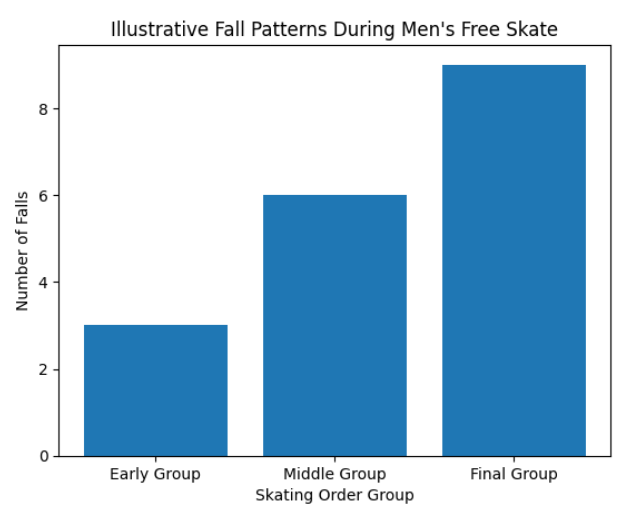
The outcome ignited instant debate: was this really a matter of pressure? Was it poor ice? Or something else? Observers noted that several top skaters produced uncharacteristic errors, prompting speculation about ice conditions; yet, no official data confirmed ice alone was to blame. More notable, perhaps, was the burden of expectation. Malinin skated with the weight of history on his back: undefeated streaks and viral highlights. At the Olympics, however, skill and potential are not enough. Execution under pressure earns medals.
The phenomenon is hardly without precedent. The Olympics have exposed similar psychological breakdowns among elite athletes: Mikaela Shiffrin’s struggles in Beijing 2022 and Simone Biles’s “twisties” in Tokyo 2021 are recent reminders that even the best can misfire when a mental block disrupts the deeply trained motor patterns that these athletes rely on. Biles herself expressed empathy for Malinin’s visible struggles when speaking to The Today Show on February 17.
“I know what he’s going through,” Biles said.
Malinin later acknowledged that the Olympic atmosphere was different: louder, heavier, and more consuming than any competition he had ever experienced. To his immense credit, he did not shy from the cameras, sharing his thoughts immediately after his free skate during post-competition interviews.
“I didn’t know how to handle it,” Malinin said. “The nerves just went, so overwhelming.”
He reported the traumatic memories and moments flooding into his mind mid-performance, causing a loss of awareness. For a skater who has pushed the sport technically, being anything less than perfect is shocking. In fact, Malinin’s own artistic choices had signaled his awareness of mental struggle. In the men’s free-skate, he skated to a track that included his own spoken reflections on perseverance and breaking free from the past. There was a cruel irony to these lyrics, however: “The pain of the past is not a chain, but a thread. Pull it and it may lead you home.” That past, paradoxically, did not lead him home—it destroyed his performance in real time.”
“All I know is that it wasn’t my best skate,” Malinin said. “And it’s definitely something I wasn’t expecting. It’s done, so I can’t go back and change it, even though I would love to.”
Figure skating is unforgiving. A single fall can rattle timing, confidence, and decision-making. Two can unravel an entire program. Yet while the free skate was a raw and painful moment for Malinin, it may also be a turning point. At 21, he has already reshaped men’s figure skating. What the Olympics exposed was not a ceiling, but rather a missing layer of experience when confronted with the heaviest pressure sport can offer. Many champions have needed an Olympic loss to learn how to win Olympic gold.
If the free skate was a setback, the Olympic gala days later provided reason for optimism. Not a competition, but a chance to reclaim the narrative, the gala offered Malinin an opportunity to remind the world who he is. He took to the ice in a gray hoodie and frayed jeans; the word “fear” written upside down on his sweatshirt. He skated to “Fear” by NF—a track that grapples with mental struggles, pressure, and losing control. He reenacted, openly and theatrically, what had happened to him under hot Olympic lights: flinching from cameras, hiding his face beneath a hood, and scrolling through hateful messages. The performance was raw and atypical for a gala. It was a statement.
Free from scores, rankings, and suffocating expectations, Malinin skated as a virtuoso performer. Then, as if to affirm his enduring technical prowess, he landed one of his quadruple jumps and unleashed a trademark backflip with a one-footed landing. It was a clean, controlled display of the skill that had made him a phenomenon and served notice that his Olympic free skate should not be viewed as an indictment of his talent.
That gala may yet be remembered as the most important skate of his Olympics. It marked the moment he reclaimed control, transforming a painful public failure into an act of resilience and performance art. He discussed how the Olympics helped him understand his purpose after the gala with NBC.
“[The Olympics] has changed me in many ways,” Malinin said. “Now I’ve really understood my purpose in skating, and that is just to bring joy and happiness to the people that enjoy watching me.”
As a fan, I was captured by him. Watching Malinin over these weeks, I felt a magnetism that explains why so many of us have been drawn to his skating: not just the jaw-dropping technical feats, but the glimpses of vulnerability he allows in his performances. There is a gravity to his presence on the ice that makes viewers hold their breath. In the gala, that same vulnerability was what made his redemption seem profoundly human.
Malinin’s arc at the Olympics underscores a broader truth about elite sports: sometimes the hardest opponent is not the one across the rink, slope, field, or court. It’s the weight of being expected to never slip. For an athlete who has recalibrated the technical ceiling of ice skating, learning to perform through the burden of expectation may be his evolution to true greatness. Malinin’s Olympics were not a simple story of failure or redemption, but rather a complex portrait of a young athlete confronting the pressures that accompany his talents. The eighth-place finish may string, but it does not define his legacy. It may simply be the moment that teaches him how to thrive when the world expects it.