



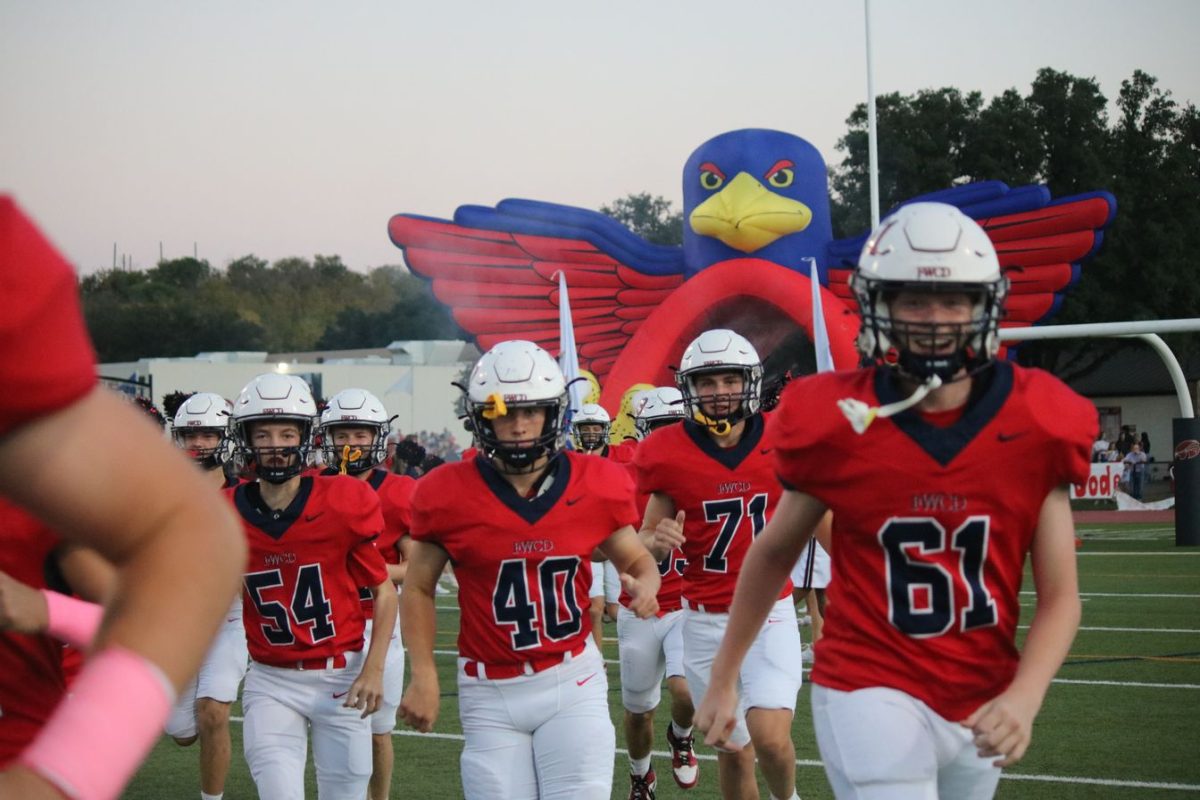
For athletes all throughout Texas, the season starts long before the first game, and in very different conditions. Summer workouts and practices for all sports are brutal, with three-digit temperatures and turf that reflects the heat. Athletes from Texas are used to the conditions, and have adapted to it well. But put an athlete from up north into these conditions, and things may go wrong quickly. While the heat of Texas can build an edge, it can just as easily damage athletes and push their limits.
For younger athletes at the high school level, this extreme heat changes the way the body is able to perform. They will sweat much more and have to learn to control their body temperature and hydration habits faster. Over time, this heat allows the body to become more efficient at cooling itself, aiding their endurance and ability to continue on during long practices and games. This becomes an advantage, as pushing through a long Texas practice in 100-degree temperatures becomes its own form of conditioning.
At this level specifically, athletes are more vulnerable to the dangers of the Texas weather as they are still learning how to properly take care of themselves. The state of Texas has identified the dangers, and now requires games and practices to be stopped if the temperature gets too high during certain sporting events. Texas schools are advised to follow the Wet Bulb Globe Temperature, or WBGT guidelines. The WBGT is a system that factors in environmental conditions such as heat, humidity, sun and wind. These guidelines cover all temperatures, starting at below 78 degrees fahrenheit, where practice is limited to three hours with three different three minute breaks each hour. These guidelines stretch up to 92 degrees fahrenheit, where the WBGT system recommends all outdoor practices to be suspended. Coaches also have to make active efforts to protect their athletes, giving ample water breaks and recovery time. Long, hot days with a sports practice are a test of mental strength and proper preparation as much as they are physical ability. This can help develop the skill of learning how to take care of the body, but it can also lead to injury and burnout very early on. Mental exhaustion due to poor preparation can be just as big of a factor as physical exhaustion, with both taking dangerous tolls on the body.
This adaptation to the temperature can turn into a real advantage. When athletes from Texas and other hot places compete in cooler areas, the pace of the sports can feel much easier and more manageable. The sport that once was exhausting and took everything out of them becomes easily sustainable. Endurance improves along with effectiveness later into games, which can separate these athletes from others who didn’t have the heat proofing advantage.
However, the heat – or really the conditioning that it provides – is not only an aid to athletes, but also a constant danger. Heat exhaustion and dehydration are two main worries that come up during almost all outdoor Texas sports in the spring, summer and early fall. The average field in Texas being made of turf adds to this problem, causing temperatures to rise even higher than normal. Ignoring hydration is one of the most dangerous things to do as an athlete in Texas during one of these hot summers, and trying to push through warning signs can lead to life-threatening heat illness.
Recovery is also one of the most important factors for athletes’ training in Texas. High temperatures place extra amounts of stress on the body throughout the day, making recovery at night, specifically sleep, so important. After long, hot practices, athletes who fail to get a proper amount of sleep face the effects: slowed body reaction, excessive soreness, lower energy and an overall worse feel throughout their body. Sometimes the heat can even make sleeping more difficult, especially during times that the heat remains all throughout the night. These conditions require athletes to completely shift their routines in order to prioritize recovery. Hydration becomes dialed in, starting hours and even days before practices and games. Athletes can prioritize nutrition, tracking meals to make sure they can maintain or gain weight with all they lose from sweat. Ice baths, stretching, recovery sessions and more become common things before and during seasons. Sleep schedules can shift, meaning athletes wake up earlier to avoid the heat, and go to bed early to avoid a loss of sleep. These measures don’t put athletes above their competition, but keep them equal, as it is necessary due to the physical demand the heat creates.
Along with this, Texas weather can affect performance in long lasting ways that cannot be seen at first. For some athletes, practicing in extreme temperatures can have an opposite effect, leading to faster mental fatigue due to improper adapting. This can also affect the way a game is played. When all senses are lowered and slightly slowed down, things like reaction time and movement speed become much slower. In sports like football, baseball and soccer, where these quick reactions are so important, even a split second of delay can massively change the outcome of a play and a game. This makes coaching jobs even harder in Texas, as coaches have to adjust practice schedules, training styles, intensity and more to protect their athletes over the course of a long season. At FWCD, this can take the form of shortened practices, longer water breaks and less intense practices both on the field and in the weight room.
An obvious advantage that Texas athletes can hold over others is home games. Teams from cooler areas that are not well adapted to the climate can struggle compared to the home teams. Fatigue comes in faster, cramps and heat exhaustion are much more common, and athletes become more susceptible to injury. Texas schools are known for packing the stands for home games and being very loud, but that type of homefield advantage is minor compared to the effects of the weather.
The weather can even change the average style of play in sports between Texas athletes and others. Due to the hotter weather, teams become more focused on lasting throughout the entire game, spending more time on conditioning and endurance over long stretches of time. This work on physical conditioning can also give more of a mental advantage to these players, having to learn how to deal with difficult moments in training and practices. All this can eventually lead to athletes who are much more disciplined and have better decision making late in games, assuming proper preparation to avoid exhaustion.
Texas heat has also pushed schools to invest in better recovery, sports science, and nourishment of their athletes. Many programs even at the high school level now track hydration, monitor body temperature, and prioritize the condition of the body over everything. At FWCD, this is done by the strength staff and trainers. Matt Segura, FWCD weight room coach, adjusts workouts and plans based on when teams have games, and the condition of certain athletes’ bodies. The Patton Field House is also equipped with a training room, holding an ice bath and three trainers, Ed Chisholm, Stacy Bourne and K’iara Williams, and other student trainers helping athletes stay hydrated and in their best condition. Along with this, schools are also making an effort to better educate their athletes on what all of this means, and efficient ways to manage recovery, heat and nutrition. Texas sports programs are forced to take this athlete recovery and preparation much more seriously because of the weather.
As said on the FWCD website when talking about the training facilities, “The William E. Scott Athletic Training Suite is a first-class facility, featuring over 1000 square feet of usable space, six treatment tables, four taping stations, an office suite, private exam team physician room, cooler storage area, and wet room. State-of-the-art modalities such as electric muscle stim units, hydrocollator heat pad units, GameReady compression units, and a large ColdTub that can fit up to 8 athletes at a time.
At the same time, constant exposure to such high temperatures can limit the amount of practices and recovery time for athletes. Outdoor practices may have to be shortened or completely cancelled due to dangerous heat. This forces discipline in athletes to work hard outside of practices as a way to ensure they are prepared for games to come. Recovery after long practices and games also becomes miles more difficult, as the body is already so tired from what came before. Instead of helping the development of athletes, the heat has the ability to slow progress and make it much harder for athletes to train and prepare consistently.
Extreme cold temperatures can also affect athletes, slowing muscle movement, flexibility, and making staying loose during games much more difficult. Athletes in colder states also face the challenge of battling freezing temperatures and stiff conditions for practices and games. This still pales in comparison to the Texas heat. With the stress placed on the body, athletes must stay focused in all aspects of recovery. This forces discipline, dedication, and mental toughness in athletes at a younger age, eventually preparing them much better for future sports than others. College programs are able to recognize the struggles of Texas athletes, and the edge this will give them over their competition over time. To be able to survive long practices, prepare the body every single day, and focus mentally and physically like a second job is not easy in the least. The heat causes sporting events in Texas to be much more difficult at the moment, but it creates discipline, preparation and toughness in athletes who prepare in this environment.
